What is vulnerability management?
Every year, thousands of new vulnerabilities are discovered, requiring organizations to patch and configure systems and applications in digital environments to protect their assets against potential security incidents. To proactively address these security flaws before attackers exploit them, organizations must practice continuous, risk-based vulnerability management (VM) to achieve the highest levels of security and risk reduction.

In general, vulnerability management can be described as the continuous process of identifying, classifying, prioritizing, and remediating security vulnerabilities in a company's systems, applications, and networks.
Far beyond remediation - it is important to emphasize that vulnerability management is not limited to fixing flaws and resolving insecure configurations. It is a practice that requires an organizational and strategic mindset within IT, since new flaws are discovered daily, requiring an appropriate approach and a business perspective to resolve them and prevent potential cyberattacks.
What is a vulnerability?
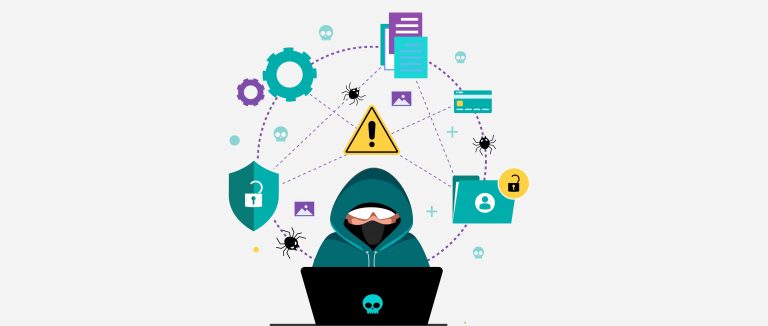
A security vulnerability is considered to be any means by which a threat actor can gain unauthorized access to or privileged control over an application, network, system, service, endpoint, or server. Tangible examples include communication ports open to the Internet and misconfigured software or operating systems, among others.
The vulnerability management process

Every new vulnerability introduces new risks to the organization. A defined vulnerability management process is therefore used to identify and address security weaknesses quickly, efficiently, and continuously. In general, this process consists of 6 stages, each with its own subprocesses and tasks.
- Identification: You cannot protect what you do not know.
The first stage involves creating a detailed inventory of all assets and environments, including the specifics needed to identify vulnerabilities. It includes a schedule of network and system scans to be performed regularly. - Prioritization: After identification, assets and environments must be categorized and prioritized based on risk and business criticality.
- Assessment: The third stage is establishing a risk baseline to continuously track progress in reducing risk and increasing security over time.
- Remediation: With prioritization based on business risk, vulnerabilities are remediated, and controls must be in place to complete remediation successfully and document progress.
- Verification: At this stage, remediation is validated through additional scans and/or technical reviews.
- Report: Finally, technical and executive teams must understand the current security posture and risk level. IT needs technical, tactical, and comparative reports on vulnerabilities identified and remediated. Executives need a business-oriented summary of the current security posture, progress over time, and risk level, including risk-level and risk-reduction indicators.
Robust vulnerability management programs treat every stage, and any substages, as part of a continuous lifecycle designed to improve security and reduce existing organizational risk, making it a daily process rather than a quarterly or annual one.