
OSINT and exposed credentials
Correlate public-source signals and exposed credentials related to the scope to investigate entry points and attack paths.
Ares by Vultus · Pentest AI
Investigate your digital surface like an adversary. AI agents, OSINT, exposed credential signals, and mobile testing connect exposures to attack paths with demonstrable impact.
Multi-agent adversarial architecture and a proprietary harness with more than 18 years of experience and Vultus Red Team TTPs. Authorized scope, technical evidence, and human supervision.
Read the Ares Manifesto ↓
From surface to attack path
An offensive investigation in which AI agents gather context, formulate hypotheses, and validate attack paths across an authorized digital surface.
Ares connects discovery, exploitation, and evidence to demonstrate how exposure can become impact. Vultus specialists guide operations and translate findings into remediation priorities.
Correlate public-source signals and exposed credentials related to the scope to investigate entry points and attack paths.
Investigate authentication, permissions, and business flows, connecting application behavior to adversarial hypotheses.
Combine virtualized environments, reverse engineering, and advanced language models to extract and analyze information relevant to testing.
AI Pentesting in Action · A Vultus Series
Kill chains executed by Ares, explained by Vultus. See how an initial exposure connects to attack paths and potential business impact.
A kill chain is the sequence of stages in an attack. In this series, documented offensive simulations show how Ares tests hypotheses, gathers evidence, and guides remediation.
A simulation that started with an exposed credential and reconstructed paths to personal data and cloud infrastructure. See how Ares connected evidence to demonstrate potential impact.
Watch on YouTube ↗PortugueseAn operation initiated by a natural-language request, with 7 hours and 30 minutes of autonomous execution. The episode explains how attack hypotheses became a documented exploitation chain.
Watch on YouTube ↗PortugueseA flaw introduced through vibe coding became the starting point for an offensive simulation. Learn how Ares identified the gap and gathered evidence to guide remediation.
Watch on YouTube ↗PortugueseA profile photo upload in a forgotten application opened an attack path in an autonomous simulation. See how Ares connected initial access to escalation all the way to domain administrator.
Watch on YouTube ↗Portuguese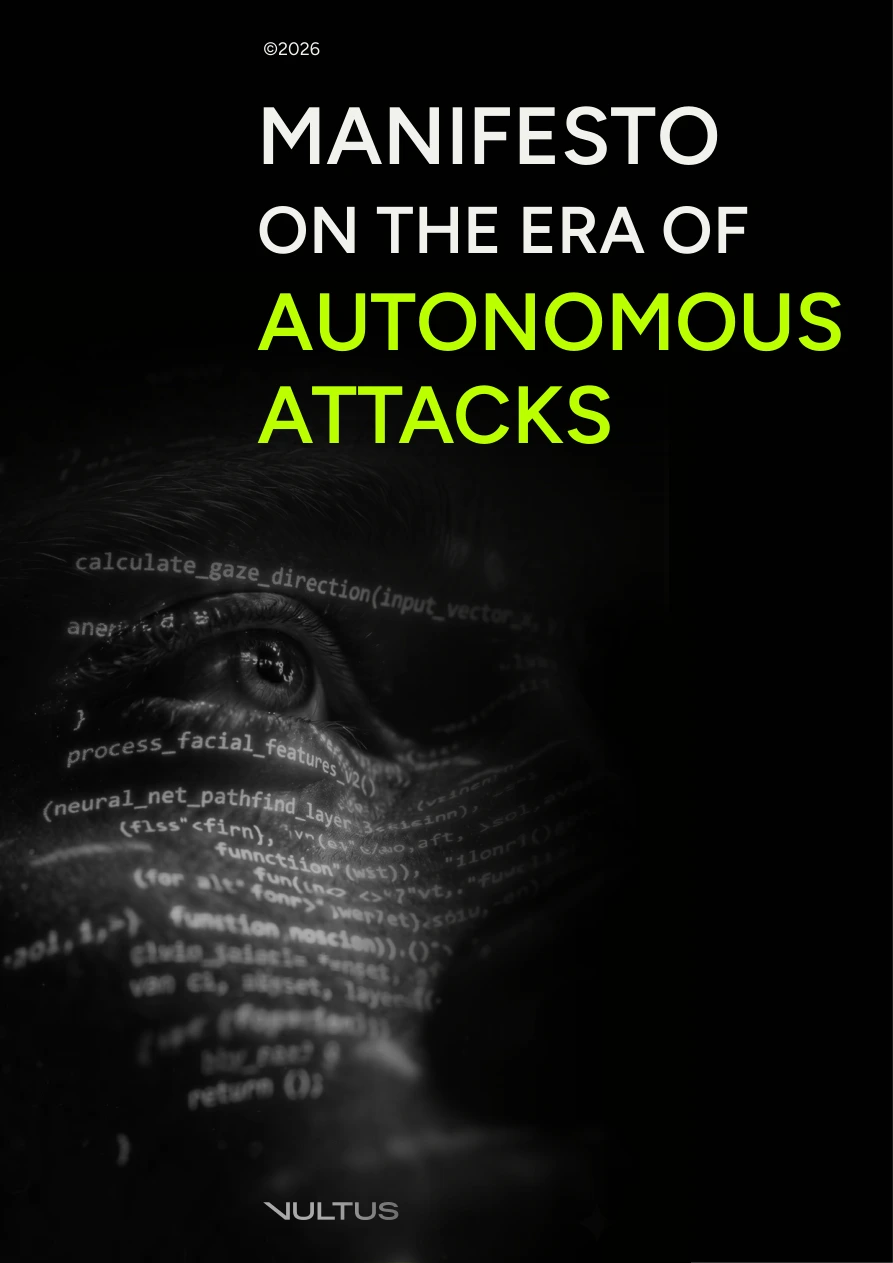
Ares Manifesto · Vultus's Vision
AI has changed the speed of offensive discovery. Defense must keep pace.
Flaws once difficult to connect become part of attack paths that can be investigated at scale. The Ares Manifesto presents Vultus's vision for responding to this shift.
Case studies and press
Experiences published by Security Leaders show autonomous testing in different sectors. EXAME presents the technology and Vultus's expansion.
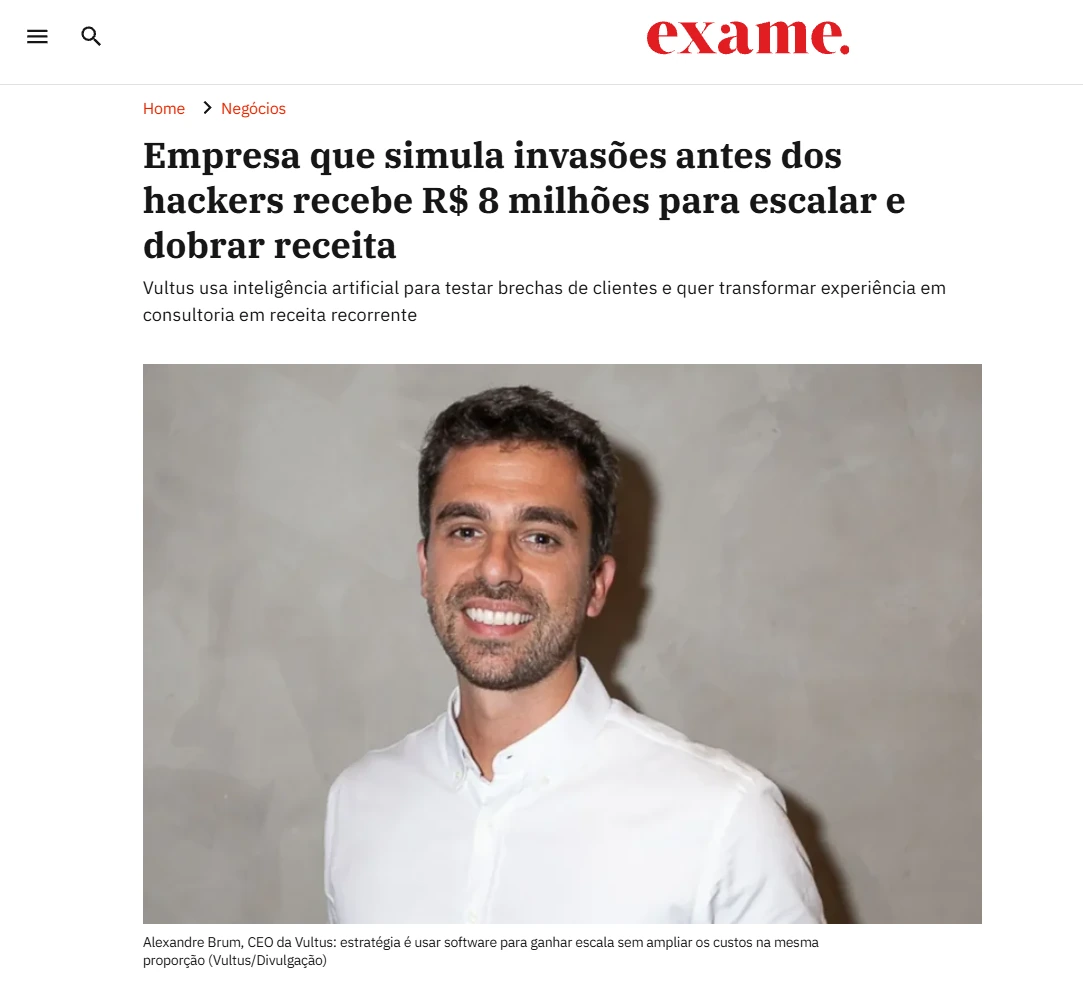 Reproduction of the article · EXAME / Business
Featured · EXAME
The article introduces Ares and Vultus's strategy to turn offensive security experience and proprietary technology into testing at greater scale.
Read the report in EXAMESecurity Leaders ·
38 vulnerabilities in five hours
To meet a tight deadline, the healthtech assessed a critical scope with Ares. According to the report, eight findings were critical and two attack chains were demonstrated, with information for reproduction and remediation.
Read the case study in Security Leaders ↗PortugueseSecurity Leaders ·
26 vulnerabilities in three hours
During a testing window planned to reduce operational impact, the rental company found flaws not identified in the traditional assessment. The article reports six critical findings and evidence that helped guide remediation.
Read the case study in Security Leaders ↗PortugueseSecurity Leaders ·
89 vulnerabilities in six hours
A critical application that had already undergone traditional assessments was investigated by autonomous agents. According to the published account, the test identified 21 critical and 29 high-severity vulnerabilities, with documented paths to guide the team's remediation.
Read the case study in Security Leaders ↗PortugueseThe reported results relate to specific scopes. Read each article for the full context.
How Ares works
The starting point is an approved scope, with defined execution limits and objectives. The investigation records tested paths and findings so the team can review the evidence and take action.
Explore Ares →Proprietary technology · Applied offensive expertise
Multiple AI agents operate within an architecture designed for offensive investigation. The harness is the orchestration layer built by Vultus to apply its Red Team knowledge to testing.
This technology brings together more than 18 years of offensive security experience and the tactics, techniques, and procedures (TTPs) of the Vultus Red Team. The goal is to test attack paths relevant to the environment and produce evidence that helps prioritize the response.
Offensive knowledge accumulated by the Vultus Red Team and incorporated into Ares's proprietary harness.
Brazilian technology used by companies, with public case studies documenting autonomous testing in practice.
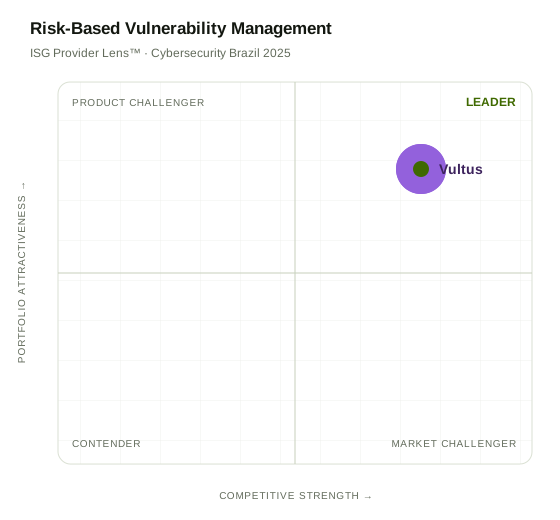
Leader quadrant in Risk-Based Vulnerability Management in ISG Provider Lens™ Cybersecurity Brazil 2025.
See the ISG recognition ↓Mobile investigation
Ares also tests mobile applications using virtualization and reverse engineering environments supported by advanced language models.
Extracting and analyzing application information helps agents understand its structure and behavior. This context informs new hypotheses and the investigation of exposures and attack paths.
Results feed into the same adversarial operation: validation, technical evidence, and remediation guidance, within the defined scope.
Offensive experience · Independent recognition
Vultus in the Leader quadrant for Risk-Based Vulnerability Management.
Recognition in ISG Provider Lens™ Cybersecurity Brazil 2025 reinforces Vultus's approach: combining technical depth with business insight to prioritize risk.
This Red Team and vulnerability management experience guides the development of Ares's proprietary harness.
A complementary operation
Scanners help identify potential vulnerabilities. Penetration testing aims to demonstrate how a flaw can be exploited and what its impact is. In Ares, agents test offensive hypotheses and document evidence to support that validation.
Autonomous investigation also uses context, hypotheses, and attack chaining. Pentesters and red teamers guide objectives, boundaries, and deeper investigation, combining agent capabilities with Vultus's offensive security experience.
When to use
Frequently asked questions
The operation can cover applications, APIs, integrations, and mobile, as well as OSINT investigation and exposed credentials related to the scope. For mobile, Ares combines virtualization, reverse engineering, and advanced language models to extract and analyze information relevant to the test. Targets, access, and objectives are defined for each operation.
Ares operations combine automation with human supervision. Specialists maintain contextual analysis, validation, and deeper technical investigation when necessary.
Ares aims to validate exploitable risks through attack hypotheses and technical evidence. Scanners help identify possible flaws; offensive validation deepens understanding of how those flaws may affect the environment.
Surfaces, objectives, and execution limits are agreed upon before the operation. The demonstration is conducted within approved scope and overseen by Vultus.
It means multiple AI agents operate within an architecture designed to test attack hypotheses. In Ares, Vultus's proprietary harness coordinates their work and incorporates its Red Team's experience and TTPs, within an authorized scope and under human supervision.
Yes. The aim is to maintain a recurring layer of offensive validation, including application changes and retesting after fixes, complementing periodic assessments.
Talk to Vultus
Discover Ares and define a demonstration scope with our specialists.